What it is
Inspection and cleaning go hand in hand. Every fire leaves creosote, a tar-like byproduct of wood smoke, on the inside of the flue; over time it narrows the flue and can ignite. Sweeping removes it, along with soot, leaves and nests. The inspection checks that the venting system is sound and in good working order: firebox, damper, smoke chamber, flue liner, chimney structure, crown, cap and flashing. The national standard (NFPA 211) describes three inspection levels. A Level 1 covers the readily accessible parts and fits routine yearly checkups. A Level 2 adds a video scan of the flue and accessible attic and crawlspace areas, and is the standard at a home sale, after a chimney fire or storm, or when the system changes. A Level 3 opens concealed areas when a serious hidden problem is suspected; we will explain why before recommending one.
Signs you need it
- It has been a year or more since anyone inspected or swept the chimney
- You are buying or selling a home
- A strong campfire or musty smell, especially on humid days or when the AC runs
- Smoke drifting back into the room, or fires that are hard to start and keep going
- Black flakes, crumbly deposits or a shiny tar-like glaze in the firebox or flue
- You had a chimney fire, lightning strike or serious hail or wind storm
- You are switching fuels, adding an insert or changing appliances
- Birds, squirrels or scratching sounds in the chimney
What we do
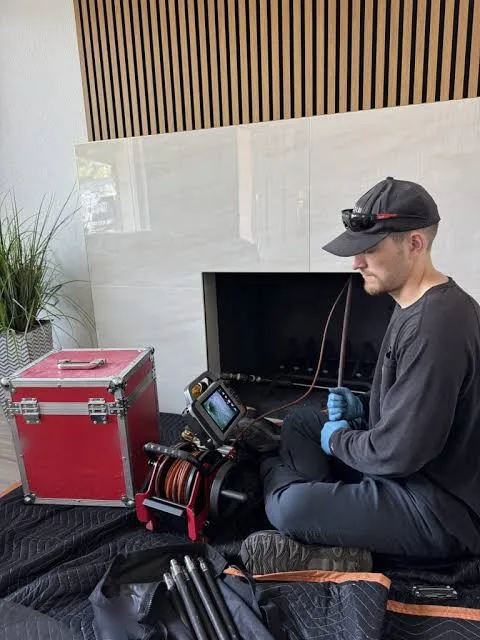
- Lay drop cloths and protect the hearth and nearby furniture before any tools come out
- Inspect the firebox, damper, smoke shelf and smoke chamber
- Run a video camera through the flue to check liner joints, cracks and gaps when the inspection level calls for it
- Brush the flue, smoke chamber and firebox and remove nests and debris, with a HEPA vacuum running the whole time
- Check the chimney structure, mortar, crown, cap and flashing from the roof when conditions allow
- Sort findings into urgent issues, items to watch and nice-to-haves, and walk you through them
What you get
A photo and video report you can keep, forward to your agent or send to your insurer, before-and-after photos of the flue, and an itemized quote with each recommended repair priced on its own line. Nothing is scheduled unless you approve it.